
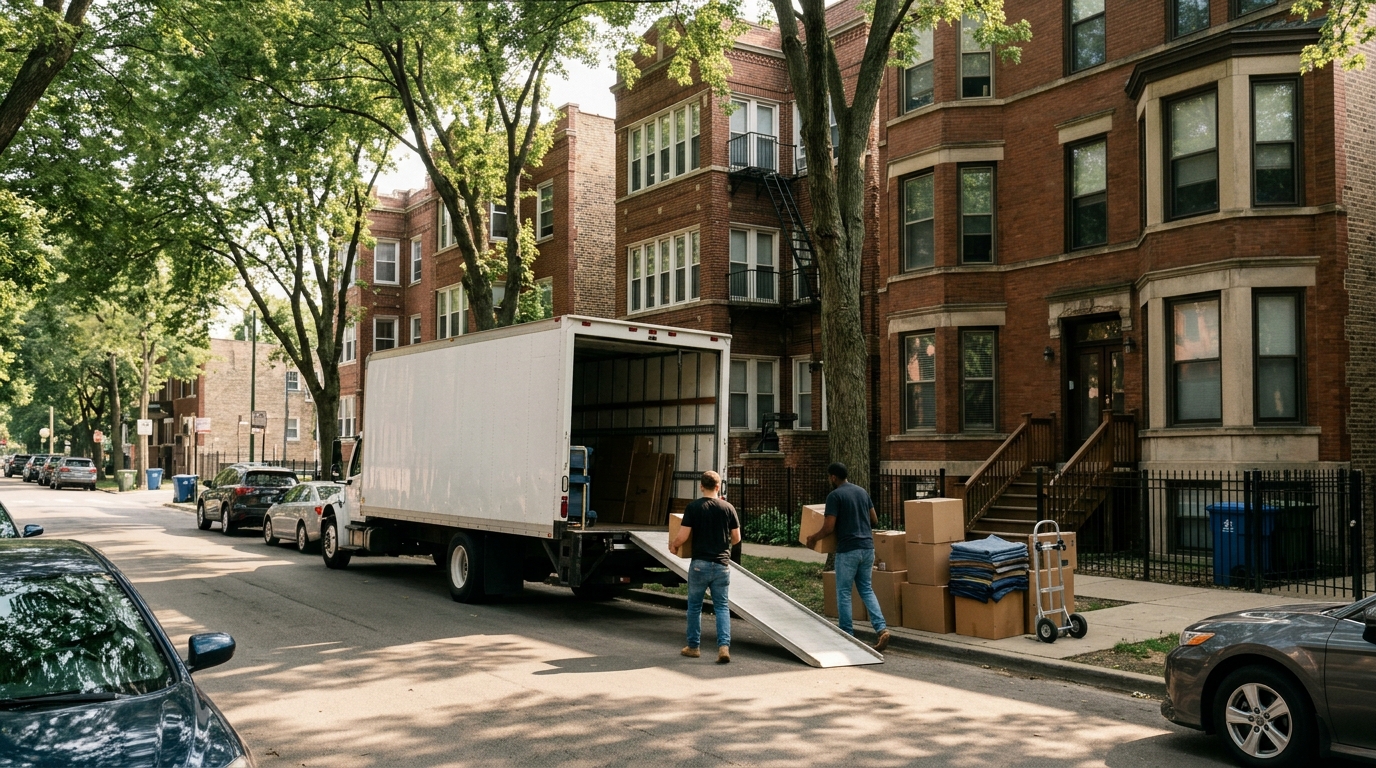
Choosing the right movers for a Chicago apartment, condo, or house requires verifying state licensing, securing building-specific freight elevator reservations, and obtaining the correct city parking permits. Windy City Movers has handled these specific logistical hurdles for over four decades, ensuring your move complies with local regulations while protecting your belongings. This guide covers the three critical pillars of a successful Chicagoland move: navigating freight elevator protocols, understanding Illinois mover licensing, and managing city parking permits.
Freight Elevator Reservations
Freight elevator reservation is the formal process of scheduling dedicated access to a building's service elevator for moving trucks and crews. In Chicago's high-rise and mid-rise residential buildings, this is not optional; it is a mandatory requirement enforced by property management to protect residential tenants and building infrastructure. Without a confirmed reservation, moving crews are often denied entry, causing significant delays and potential penalties.
Building Management Protocols
Property management companies in Chicago typically require movers to submit a reservation request 48 to 72 hours in advance. This request usually includes the date and time of the move, the number of movers, and a copy of the mover's Certificate of Insurance (COI). The COI must name the building as an additional insured party, proving that the moving company carries liability coverage for any damage to the building's elevators, walls, or floors.
Walk-Up and Low-Rise Considerations
Documentation and Compliance
Professional movers handle the administrative burden of these reservations. They know which buildings require specific forms and which accept digital submissions. By using a licensed and insured company, you ensure that the necessary insurance documentation is provided to the building management, preventing last-minute rejections. This proactive approach saves time and ensures the move proceeds according to schedule.
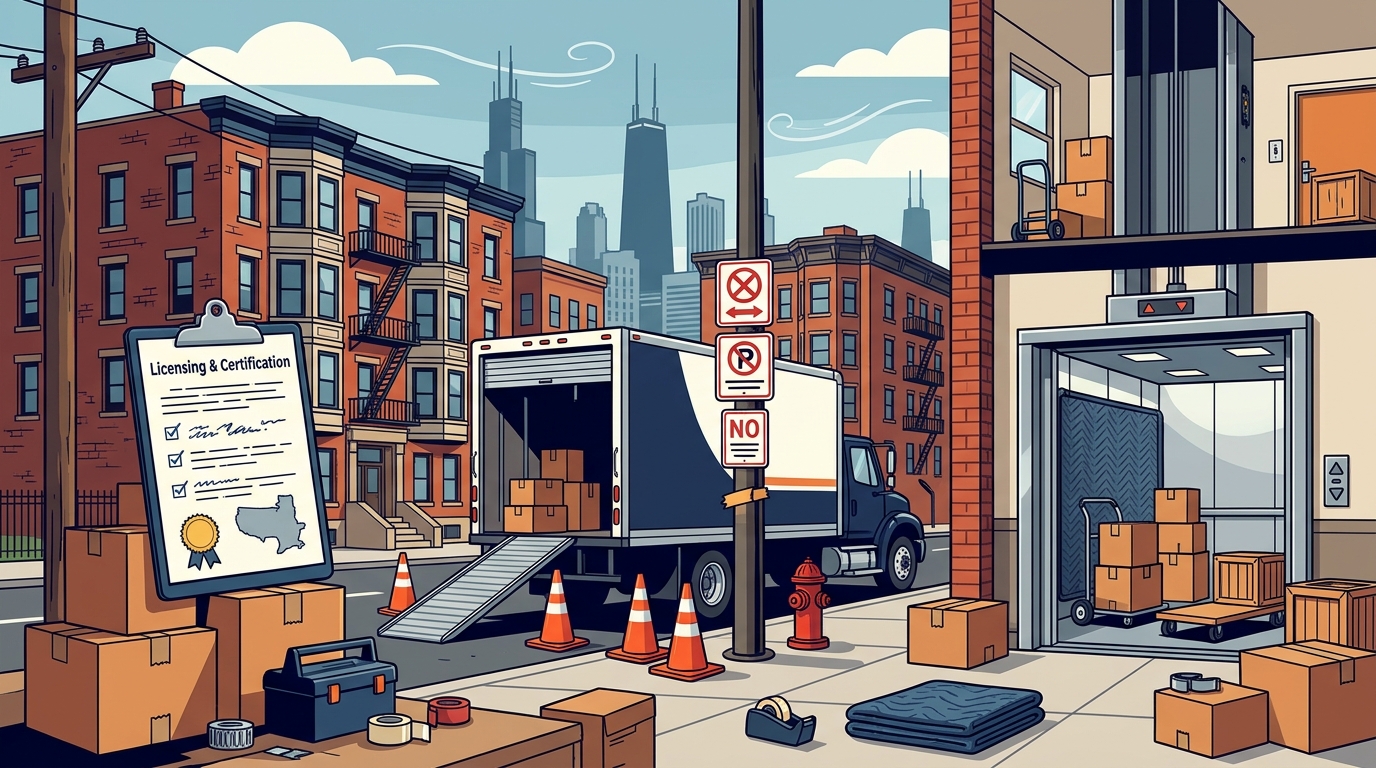
Illinois Mover Licensing
Illinois mover licensing is the regulatory requirement for moving companies to operate legally within the state, ensuring they meet safety, insurance, and financial responsibility standards. The Illinois Commerce Commission (ICC) regulates intrastate moving companies, while the Federal Motor Carrier Safety Administration (FMCSA) regulates interstate moves. Verifying these licenses is the first step in protecting your belongings and your financial interests.
ICC and FMCSA Registration
Every legitimate moving company in Illinois must hold an active ICC license. This license number should be displayed on the company's website, trucks, and written estimates. For interstate moves, the company must also be registered with the FMCSA, holding a valid USDOT number and MC number. Windy City Movers is licensed by the ICC (#153317) and registered with the US DOT (#4338139), ensuring full compliance for both local and long-distance moves.
Insurance and Liability Coverage
Why Verification Matters
Unlicensed movers may offer lower prices but lack the legal framework to protect your property. If damage occurs, you have no recourse with an unlicensed operator. By choosing a licensed company, you ensure that the move is governed by state and federal regulations, providing a clear path for dispute resolution if issues arise. Always ask for the license number and verify it with the ICC or FMCSA databases before signing a contract.
City Parking Permits
City parking permits are official authorizations that allow moving trucks to park in designated zones for a specific duration, usually 24 hours. In Chicago, parking regulations are strict, and unauthorized parking of moving trucks can result in fines, towing, or delays. Securing the correct permit is essential for a smooth move, especially in dense urban neighborhoods where parking is scarce.
Chicago Parking Regulations
Chicago requires moving trucks to obtain a parking permit from the city's Department of Transportation (CDOT) or through the building management. The permit allows the truck to park in a specific zone for 24 hours, typically from 7:00 AM to 7:00 PM. Some buildings have their own parking agreements with the city, which may cover the permit cost for their residents. Others require the resident or mover to arrange and pay for the permit directly.
Suburban Parking Considerations
In the Chicago suburbs, such as Evanston, Naperville, and Glenview, parking regulations vary by municipality. Some suburbs require permits for moving trucks, while others have specific zones where moving trucks are prohibited. It is essential to check local ordinances before the move. Professional movers are familiar with these local rules and can help navigate the permit process, ensuring that the truck is parked legally and safely.
Resident vs. Mover Responsibility
Comparison of Moving Requirements
| Requirement | High-Rise/Condo | Walk-Up/Low-Rise | Suburban House |
|---|---|---|---|
| Freight Elevator Reservation | Mandatory (48-72 hrs advance) | Not applicable | Not applicable |
| Building COI Requirement | Mandatory | Often required | Rarely required |
| City Parking Permit | Often managed by building | May be required by resident | Varies by municipality |
| Stairwell Access Rules | Strict (elevator only) | Strict (narrow stairs) | Minimal |
Key Takeaways
- Freight elevator reservations are mandatory in most Chicago high-rises and require 48 to 72 hours' notice.
- Property management requires a Certificate of Insurance (COI) naming the building as an additional insured.
- Illinois mover licensing is regulated by the ICC for local moves and the FMCSA for interstate moves.
- Chicago parking permits allow moving trucks to park for 24 hours in designated zones.
- Suburban parking regulations vary by municipality and require local verification.
- Professional movers handle the administrative burden of reservations, permits, and insurance documentation.
- Verifying a mover's license number with the ICC or FMCSA is a critical step in protecting your belongings.
Frequently Asked Questions
How far in advance should I book a freight elevator reservation?
Most Chicago buildings require freight elevator reservations to be submitted 48 to 72 hours in advance. Some high-demand buildings may require longer lead times, especially during peak moving seasons. It is best to submit the request as soon as your moving date is confirmed to avoid scheduling conflicts.
Who is responsible for the parking permit in a Chicago apartment move?
Responsibility varies by building. Some property management companies handle the parking permit as part of the move-in process, while others require the resident to arrange it. Clarify this with your building management early in the planning process to avoid confusion on moving day.
What is the difference between ICC and FMCSA licensing?
The Illinois Commerce Commission (ICC) licenses moving companies for intrastate moves within Illinois. The Federal Motor Carrier Safety Administration (FMCSA) registers companies for interstate moves across state lines. A company moving within Chicago needs an ICC license, while a company moving from Chicago to another state needs both ICC and FMCSA registration.
Is basic liability coverage enough for my move?
Do I need a parking permit for a suburban move?
Parking permit requirements vary by suburb. Some municipalities require permits for moving trucks, while others have specific zones where parking is prohibited. Check local ordinances or consult with your moving company to determine the specific requirements for your destination.
What documents do I need to provide for a freight elevator reservation?
You typically need to provide the date and time of the move, the number of movers, and a copy of the mover's Certificate of Insurance (COI). The COI must name the building as an additional insured party. Your moving company can usually provide this documentation on your behalf.
Can I move on a weekend in Chicago?
Yes, weekends are popular for moving in Chicago. However, freight elevator reservations and parking permits may be harder to secure on weekends due to high demand. It is best to book your move and reservations well in advance to ensure availability.
Conclusion
Navigating the logistical complexities of a Chicago move requires attention to detail and knowledge of local regulations. From securing freight elevator reservations to verifying mover licensing and obtaining city parking permits, each step plays a crucial role in ensuring a smooth and compliant move. Windy City Movers brings over four decades of experience to these challenges, providing licensed and insured services that handle the administrative burden on your behalf. Whether you are moving in a high-rise condo or a suburban house, our team ensures that every requirement is met, allowing you to focus on settling into your new home. For an accurate quote and to discuss your specific moving needs, contact us today.